Have you noticed blood coming from your gums while brushing or flossing your teeth? Occasional bleeding may seem harmless, but frequent bleeding gums should not be ignored. Bleeding, swollen or tender gums can be signs of gum inflammation and may sometimes indicate gum disease.
The good news is that many gum problems can be managed successfully when they are identified early. Maintaining good oral hygiene and having regular dental check-ups can help protect your gums and teeth.
If you frequently experience bleeding gums, it is a good idea to have your teeth and gums examined by a dental professional.
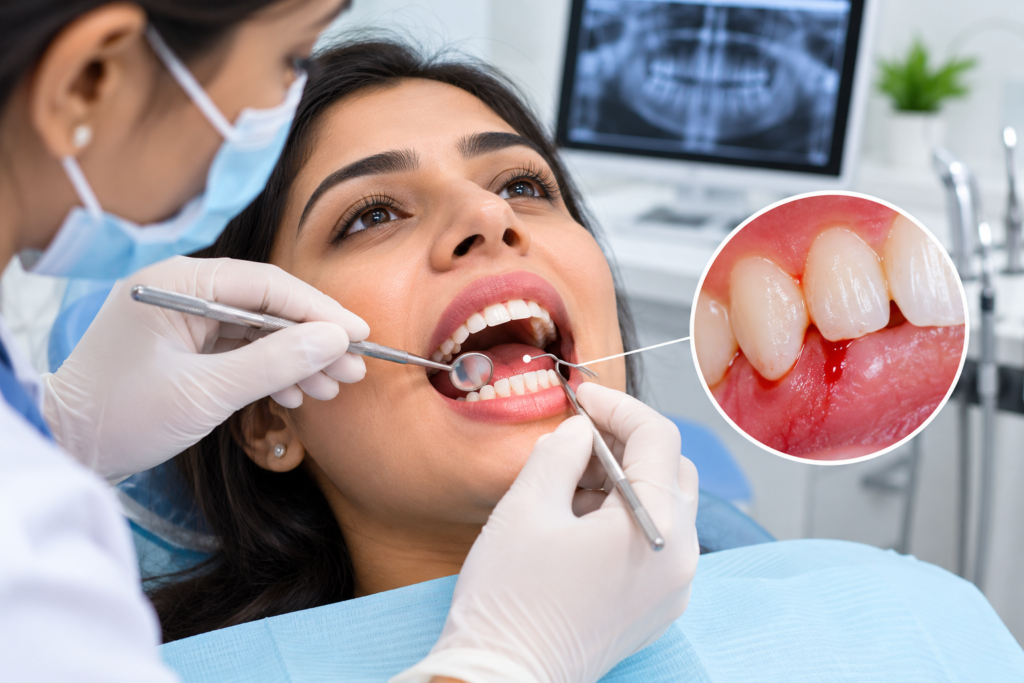
What Causes Bleeding Gums?
One of the most common causes of bleeding gums is plaque buildup around the teeth and gumline.
Plaque is a sticky layer containing bacteria that continuously forms on your teeth. When it is not removed properly through regular brushing and cleaning between the teeth, it can irritate the gums. Over time, plaque can harden into tartar, which cannot be removed effectively with ordinary brushing.
Some common causes and contributing factors include:
1. Plaque Buildup
Plaque is a sticky layer containing bacteria that forms on your teeth. When it is not removed properly, it can irritate the gums and contribute to gum problems. Learn more about maintaining good oral hygiene and protecting your teeth by visiting our dental care
2. Gingivitis
Gingivitis is an early form of gum disease. It can cause gums to become red, swollen and bleed during brushing or flossing.
When detected early, gingivitis can often be improved with better oral hygiene and professional dental care.
3. Periodontitis
If gum disease progresses without appropriate treatment, it can affect the tissues and bone that support the teeth. This more advanced condition is called periodontitis.
Warning signs can include bleeding gums, gum recession, bad breath and loose teeth. Advanced periodontal disease can eventually contribute to tooth loss.
4. Brushing Technique
Brushing too aggressively can irritate the gums. At the same time, avoiding areas that bleed is not usually the solution because plaque can continue to accumulate there.
Use a suitable toothbrush and gentle, thorough brushing technique.
5. Not Cleaning Between Teeth
A toothbrush cannot effectively clean every surface between your teeth. Floss or another suitable interdental cleaner can help remove plaque and food debris from these areas.
6. Smoking
Smoking is an important risk factor for gum disease and can negatively affect gum health. If you smoke, speak with a healthcare professional about ways to quit.
7. Other Factors
Pregnancy, diabetes, certain medicines and other health conditions can also affect gum health. If bleeding is frequent or unexplained, a dental examination can help determine the underlying cause.
What Are the Symptoms of Gum Disease?
Bleeding gums are not the only warning sign to watch for.
Other symptoms may include:
- Red or swollen gums
- Tender or sore gums
- Bleeding while brushing or flossing
- Persistent bad breath
- Bad taste in the mouth
- Receding gums
- Tooth sensitivity
- Loose teeth
- Changes in the way teeth fit together
Gum disease may sometimes develop without significant pain, so regular dental examinations are important even when you feel that your teeth are fine
Is Bleeding While Brushing Normal?
Frequent bleeding while brushing should not simply be considered normal.
Bleeding can occur when the gums are inflamed or irritated, particularly when plaque has accumulated around the gumline.
If your gums regularly bleed when brushing, flossing or eating certain foods, consider scheduling a dental examination rather than ignoring the symptom.
It is also important not to stop cleaning your teeth simply because your gums bleed. Proper daily plaque removal is an important part of maintaining gum health.
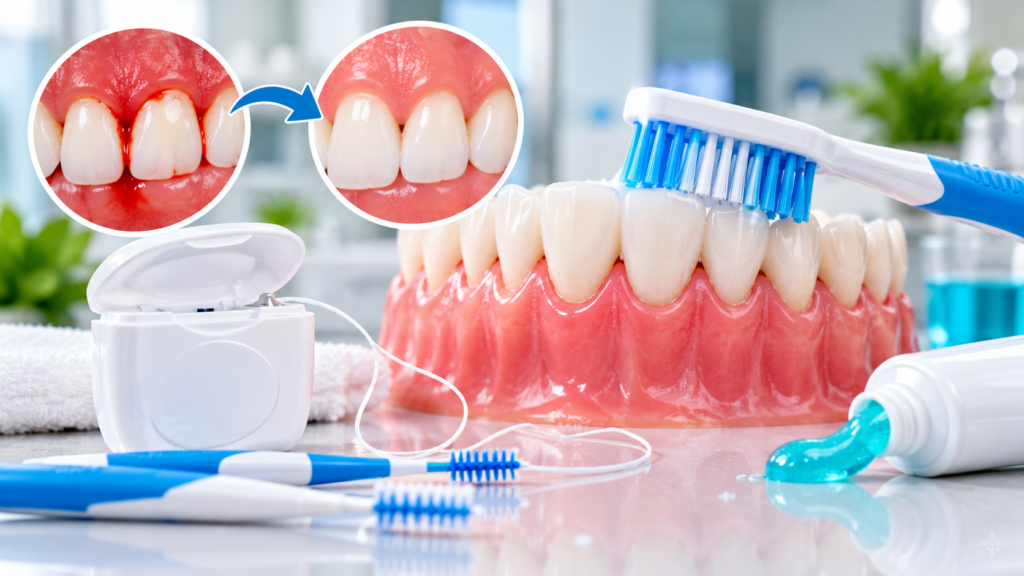
How Can You Prevent Bleeding Gums?
Good daily oral hygiene can help reduce plaque buildup and support healthier gums.
1. Brush Your Teeth Twice a Day
Brush your teeth twice daily using fluoride toothpaste. Spend enough time cleaning all tooth surfaces and gently clean along the gumline.
2. Clean Between Your Teeth
Use dental floss or an appropriate interdental cleaner to clean between your teeth every day.
These areas can be difficult to reach with a normal toothbrush, making interdental cleaning an important part of oral hygiene.
3. Don’t Ignore Bleeding
If your gums repeatedly bleed, don’t simply wait for the problem to disappear.
A dentist can examine your gums and determine whether plaque buildup, gingivitis, periodontitis or another issue may be contributing to the bleeding.
4. Maintain Regular Dental Check-Ups
Regular dental visits allow problems to be identified earlier and can help you maintain healthier teeth and gums.
5. Avoid Smoking
Smoking can increase the risk of gum problems. Quitting can benefit your overall health as well as your oral health.
6. Maintain a Healthy Diet
A balanced diet supports overall health, including your oral health. Try to limit frequent consumption of sugary foods and drinks.
You should consider visiting a dentist if your gums regularly bleed, especially if you also have:
- Swollen or painful gums
- Persistent bad breath
- Receding gums
- Loose teeth
- Tooth sensitivity
- A bad taste in your mouth
- Persistent gum inflammation
More severe symptoms, such as very painful and swollen gums, loose teeth, mouth ulcers or unusual lumps, require prompt dental assessment.
Early assessment can help determine the cause and appropriate treatment.
How Are Bleeding Gums Treated?
Treatment depends on why your gums are bleeding and how advanced the problem is.
During a dental examination, your dentist may assess your teeth and gums and look for plaque, tartar, inflammation, gum pockets, recession or other signs of periodontal problems.
If you are experiencing bleeding gums or other dental concerns, Karthika Dental Clinic in Bhupalpally can help you understand your oral health needs and explore our dental treatments.
For early gum disease, treatment may include:
- Professional dental cleaning
- Improved brushing technique
- Daily interdental cleaning
- Oral hygiene guidance
- Regular dental monitoring
More advanced gum disease may require additional periodontal treatment depending on the individual’s condition.
The important point is that treatment should be based on the actual cause of the bleeding, rather than trying to manage the symptom alone.
Why do my gums bleed when I brush?
Bleeding while brushing can occur when the gums are inflamed, commonly because of plaque buildup around the teeth and gumline. If bleeding happens frequently, a dental examination is recommended.
Can bleeding gums be a sign of gum disease?
Yes. Bleeding gums are a common sign of gingivitis and can also occur with more advanced periodontal disease
Should I stop brushing if my gums bleed?
Do not simply stop brushing because your gums bleed. Proper plaque removal is important for gum health. However, use a gentle brushing technique and seek professional advice if bleeding continues.
How can I keep my gums healthy?
Brush twice a day with fluoride toothpaste, clean between your teeth every day, avoid smoking and maintain regular dental check-ups.
When should I visit a dentist for bleeding gums?
If your gums frequently bleed, or if you have swelling, pain, persistent bad breath, gum recession or loose teeth, arrange a dental examination.
Take Care of Your Gums Before the Problem Gets Worse
Healthy gums are an important part of a healthy smile. Bleeding gums should not be ignored, particularly when the bleeding happens repeatedly.
Simple daily habits such as brushing twice a day and cleaning between your teeth can help maintain good oral hygiene. However, if you already have persistent bleeding, swelling or other gum symptoms, professional dental assessment can help identify the cause and guide appropriate treatment.
If you are experiencing bleeding gums or other dental concerns, Karthika Dental Clinic in Bhupalpally can help you understand your oral health needs and discuss suitable treatment options.
Don’t wait for a small gum problem to become a bigger dental problem. Schedule a dental consultation and take the first step toward healthier gums and a healthier smile.