A persistent toothache does not always mean that a tooth needs to be removed. In some situations, the soft tissue inside the tooth can become inflamed or infected, and root canal treatment may be considered to treat the affected tooth and preserve its structure.
The appropriate treatment depends on the condition of the tooth and the findings from a dental examination.
What Is Root Canal Treatment?
Explain in simple patient-friendly language:
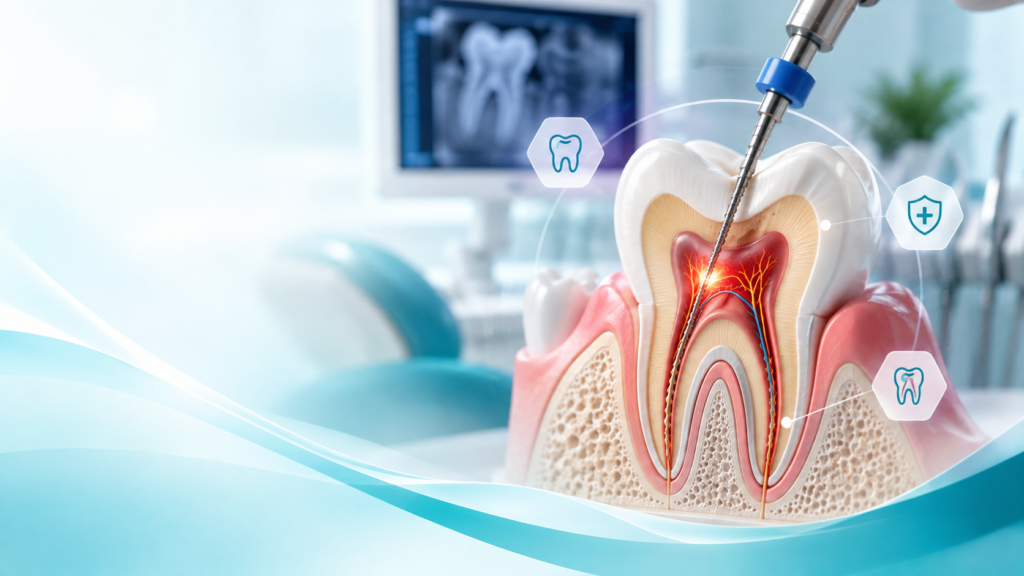
Root canal treatment is a dental procedure used to treat problems affecting the pulp or inner tissues of a tooth.
The dentist removes the affected tissue, cleans and shapes the inside of the tooth, and seals it. Depending on the condition of the tooth, additional restoration such as a crown may be recommended

When Might Root Canal Treatment Be Needed?
Discuss possible situations such as:
- Deep tooth decay
- A cracked or damaged tooth
- Injury to a tooth
- Infection affecting the inside of the tooth
- Repeated dental procedures affecting the same tooth
Don’t say that every toothache requires a root canal.
What Symptoms Can Indicate a Problem?
Possible symptoms may include:
- Persistent tooth pain
- Pain when biting or chewing
- Sensitivity to hot or cold
- Swelling around the tooth
- Tenderness
- Discoloration of the tooth
Some dental infections may not cause obvious symptoms, so a dental examination is important when there is concern.
What Happens During Root Canal Treatment?
Step 1 — Examination
The dentist examines the tooth and assesses the problem.
Step 2 — Local Anaesthesia
The area is numbed to help keep the procedure comfortable.
Step 3 — Cleaning the Tooth
The affected tissue inside the tooth is removed and the internal space is cleaned.
Step 4 — Sealing
The cleaned space is filled and sealed.
Step 5 — Restoring the Tooth
Depending on the tooth’s condition, a suitable restoration may be recommended to protect it and restore function.

Does Root Canal Treatment Hurt?
Many patients are concerned about pain during root canal treatment.
Modern dental treatment uses local anaesthesia to numb the area. You may experience some tenderness or discomfort after treatment, but your dentist can provide appropriate aftercare guidance based on your situation.
What Happens After Root Canal Treatment?
After treatment, follow your dentist’s instructions carefully.
Depending on the tooth and restoration, you may be advised to avoid putting excessive pressure on it until the final restoration is completed.
Maintain your regular brushing and interdental-cleaning routine and attend any recommended follow-up appointments.
Can a Root Canal Save a Natural Tooth?
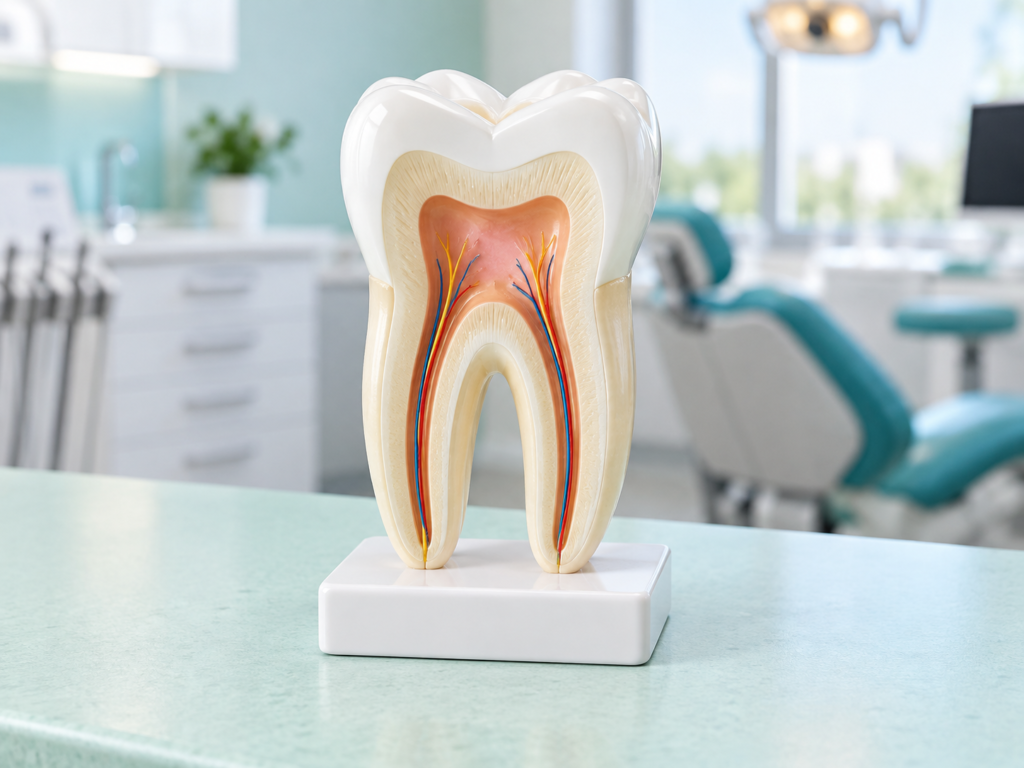
The goal of root canal treatment is generally to treat the affected internal tissue while allowing the natural tooth to remain in place.
Whether the tooth can be successfully treated depends on factors such as the extent of damage, remaining tooth structure and overall oral health.
Your dentist can assess the tooth and explain the available options.
When Should You See a Dentist?
Don’t ignore persistent tooth pain or swelling.
Arrange a dental examination if you experience:
- Persistent toothache
- Pain while chewing
- Prolonged hot or cold sensitivity
- Facial or gum swelling
- A damaged or cracked tooth
- Tooth discoloration
Experiencing Persistent Tooth Pain?
Don’t wait for ongoing tooth pain or sensitivity to become more uncomfortable.
A dental examination can help identify the cause of your symptoms and determine which treatment options may be appropriate.