Losing a tooth can affect more than just your smile. A missing tooth may make chewing certain foods difficult and can affect how you feel about your appearance. Depending on the location of the missing tooth and your overall oral health, there are several ways to replace it.
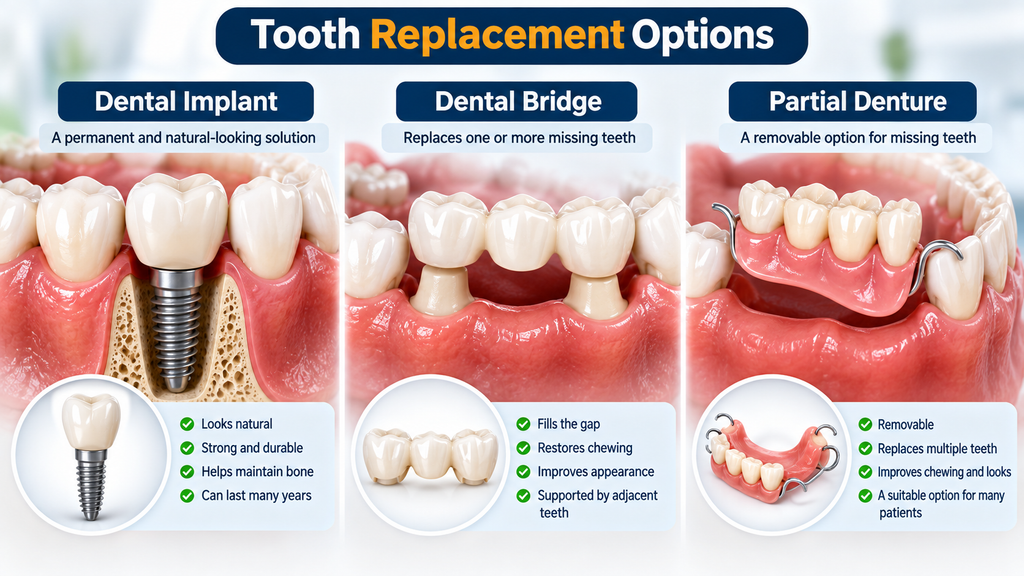
Common tooth replacement options include dental implants, dental bridges and dentures. The most suitable option depends on factors such as the number of missing teeth, the condition of the surrounding teeth and gums, bone support, overall oral health, and your individual needs.
If you have a missing tooth, a dental examination can help determine which replacement option may be appropriate for you.
What Is a Missing Tooth?
A missing tooth means that one or more natural teeth are no longer present in the mouth. Tooth loss can happen because of tooth decay, gum disease, injury, infection or other dental problems.
Even when a missing tooth does not cause immediate pain, it is worth discussing with a dentist. Replacing missing teeth can help restore oral function and improve the appearance of your smile.
What Causes Tooth Loss?
There are several common reasons why people lose teeth.
Tooth Decay
Untreated tooth decay can become severe and damage the structure of a tooth. In some cases, a tooth can be treated and saved, but severely damaged teeth may sometimes need to be removed.
Gum Disease
Advanced gum disease can affect the tissues and structures supporting the teeth. This may eventually contribute to loose teeth and tooth loss.
Dental Injury
Accidents, sports injuries or other trauma can damage or completely knock out a tooth.
Cracked or Damaged Teeth
A severely cracked or damaged tooth may not always be restorable. A dentist needs to examine the tooth before deciding whether it can be preserved.
Poor Oral Health
Inadequate brushing, flossing and regular dental care can increase the risk of cavities and gum problems, which may eventually contribute to tooth loss.
Why Should You Consider Replacing a Missing Tooth?
A missing tooth can affect your ability to chew comfortably and may change the way your teeth come together.
Depending on the individual situation, replacing a missing tooth may help restore chewing function, improve appearance and support a more complete smile.
What Are the Different Tooth Replacement Options?
There is no single replacement option that is suitable for everyone. Your dentist can evaluate your teeth, gums and overall oral health before recommending an appropriate solution.
1. Dental Implants
Dental implants are one option for replacing missing teeth.
An implant is placed into the jawbone and can support a dental restoration designed to replace the missing tooth.
Implants may be considered for suitable patients, but an examination and treatment planning are necessary before deciding whether they are appropriate.
2. Dental Bridges
A dental bridge can replace one or more missing teeth by using the surrounding teeth or other appropriate support.
Bridges can help restore the appearance of the smile and chewing function.
If you are considering a bridge, your dentist will examine the neighboring teeth and surrounding tissues to determine whether it is a suitable option.
Learn more about Crowns and Bridges and the available restorative options.
3. Dentures
Dentures are removable dental appliances that can replace multiple missing teeth or, in some situations, all teeth in an arch.
Depending on the number of missing teeth and your individual needs, a dentist may discuss partial or complete dentures.
The choice between different denture options can depend on factors such as the number of teeth being replaced, bone support, cost and individual preferences.
Which Tooth Replacement Option Is Best for You?
The best tooth replacement option depends on your individual dental condition.
Your dentist may consider:
- Number of missing teeth
- Location of the missing tooth
- Condition of neighboring teeth
- Gum health
- Available bone support
- Overall oral health
- Your personal preferences
- Treatment requirements and budget
There is no universal solution for every patient. A dental examination is important before choosing a tooth replacement treatment.
What Happens If You Leave a Missing Tooth Untreated?
Some people delay replacing a missing tooth because they do not have pain. However, the absence of a tooth can affect chewing and the overall function of the mouth.
The surrounding teeth and oral structures may also be affected over time. The extent of these changes varies from person to person.
That is why it is a good idea to discuss a missing tooth with a dentist even if it is not currently painful.
Can a Missing Tooth Be Replaced Immediately?
Not every missing tooth can be replaced immediately.
The timing of treatment depends on why the tooth was lost, the condition of the gums and jawbone, the presence of infection or other dental problems, and the type of replacement being considered.
For example, implant treatment requires careful assessment and planning before placement. Your dentist can explain the appropriate treatment sequence for your individual situation.
How Can You Protect Your Remaining Teeth?
Replacing a missing tooth is only one part of maintaining good oral health.
You should also:
- Brush twice a day with fluoride toothpaste.
- Clean between your teeth regularly.
- Limit frequent sugary foods and drinks.
- Avoid using your teeth to open packages.
- Wear appropriate protection during contact sports.
- Visit your dentist for regular examinations.
- Treat dental problems before they become more serious.
Good oral hygiene can help protect your remaining natural teeth and gums.
Consider scheduling a dental examination if:
- You have recently lost a tooth.
- A tooth has become loose.
- You have difficulty chewing.
- You have pain around a missing or damaged tooth.
- Your gums are swollen or bleeding.
- You want to understand your replacement options.
- You are considering dental implants, bridges or dentures.
If a tooth was recently knocked out because of an injury, seek urgent dental care because treatment timing can be important.
Frequently Asked Questions
Can one missing tooth be replaced?
Yes. Depending on your oral health and individual circumstances, options may include a dental implant, bridge or another suitable restoration.
What is the best replacement for a missing tooth?
There is no single best option for everyone. Your dentist will consider your teeth, gums, bone support, overall oral health and treatment preferences before recommending an appropriate option.
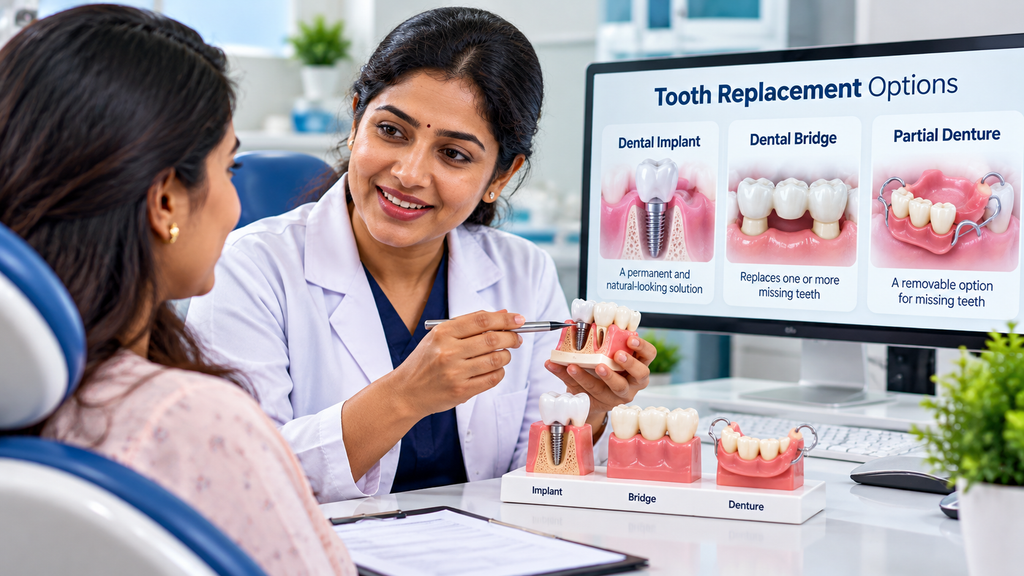
Is a dental implant the only option for a missing tooth?
No. Dental implants are one option. Bridges and removable dental appliances may also be considered depending on the situation.wing?
Yes. A missing tooth can affect chewing, especially when it is located in an area that plays an important role in biting or grinding food.
Can I replace several missing teeth?
Yes. Depending on the number and location of missing teeth, treatment options may include bridges, implants, partial dentures or other restorative solutions.
How do I know which tooth replacement option is right for me?
The best way to determine a suitable option is to have a dental examination. Your dentist can assess your teeth, gums and supporting structures and explain the available choices.
A missing tooth does not have to mean living with an incomplete smile. Today, several tooth replacement options are available, including dental implants, bridges and dentures.
The right choice depends on your oral health, the number and location of missing teeth, supporting structures and individual treatment needs.
If you have a missing tooth and want to understand your options, Karthika Dental Clinic in Bhupalpally can evaluate your dental condition and help you understand suitable tooth replacement solutions.